Monday, July 23, 2012

What's next?

Back when I was just beginning my climb up the corporate ladder, I had a boss who infuriated me.  We had little in common, except our employer.

I was young, confident, dedicated, eager to please and hungry to earn my stripes yesterday.  I was the proverbial young man in a hurry.  After all, I had joined the corporate world with a passel of collegiate achievements, a brain full of book-learning and ideas out the wazoo for how to do things differently and better.  Full of piss and vinegar, as they say.

He was ancient forty-something.  A West Pointer who had served in 'Nam.  He was a hard-ass and I was just a plebe.

Whenever I finished some project or assignment or report, he'd give a quick, cursory thank-you and then ask, "What's next?"  Every. Single. Time. 

I wanted a pat on the back, an acknowledgement of my brilliance, an atta-boy.  I wanted some show of gratitude for the contribution I thought I was making.  I wanted recognition.  After all, that was what I expected after being a BMOC.  Who did he think he was?

He would have none of it.  Peering over his readers, he'd ask "What's next," as if I had an actual clue as to what he was talking about.

He stifled me. I hated him.  I called him "Big Brother."


Monday, July 16, 2012

We, the leaders

Is business ethics an oxymoron such as "open secret,"act naturally" or "exact estimate?" Sure seems that way as the list of misdeeds grows.

The Libor scandal continues to gestate like that deadly virus from The Andromeda Strain.

(Even if you can't differentiate Libor from a Labradoodle, you should be paying attention as it affects pretty much everything in the world of commerce.)

Other recent transgressions include faked CEO resumes, bribery, and outright theft, to name a few.

While businesspeople acting badly is certainly not the norm, the lack of business ethics is not a new subject. The portrayal of businessmen (and women) as murderers, conspirators and villains is one that apparently never grows old.  The list of business-related morality-tale movies is long and notorious illustrious.

None of the business owners I coach or consult with are sociopaths, fortunately, and I think it is safe to say that more business owners are focused on doing good, as opposed to doing well. They're more likely to be Rotarians than recidivists.


Monday, July 9, 2012

About time

"Everybody's talking at me.  I can't hear a word they're saying." - Harry Nilsson.


Do you practice management by tuning out?  

There's the tuning out that Harry Nilsson sang about:  unhappy with your current situation, you shut out the world because you just can't handle one more request from yet another needy person.  You long for more control, a better situation, a clearer path, but aren't sure where that place may be or how to get there.  You are stuck in neutral; you know that there's a road not taken for you, but you can't find your keys.

There's also the productive kind of tuning out, one that's sadly not immortalized in song.  It's where you actively limit your distractions, focus on your priorities and feel a tangible sense of accomplishment.  You are in control, in balance, working on your business rather than in your business.  You make some progress every day, and hit your goals over time.

We all live in the same age of distraction.  It affects us all, and especially for those of a certain age, time seems to be accelerating away from us.  There's too much to do and realistically, not enough time available to do it all.  We are constantly running to catch up to our to-do lists and not making progress.  I call it the one head, many hats syndrome.

Monday, July 2, 2012

Business Scene Investigation


The following is a true story. The names have been changed to protect the disappointed.

The facts:

It looked like the perfect evening:
  • A summertime shindig at a recently-opened lakeside bistro;
  • A world-class chef at the grill; 
  • A pre-holiday weekend;
  • A perfect weather forecast, and
  • A renowned local band providing entertainment.
With more than a month of preparation and provisioning invested in the event, expectations were high.  Instead of a perfect evening, it was a perfect set-up:  only 35 patrons showed. A crime for sure.

The loss the house took that night is still being counted, both financial and psychic.  Certainly, the crowd was far below estimates as indicated by the number of staff on hand. While the diners were oblivious, the pain was clearly evident on the proprietor's face and in his voice.  He had been taken. Big time.

Monday, June 25, 2012

Main Street, with a bullet

The phrase "with a bullet" derives from the music industry.  It comes from Billboard magazine, the recording industry's bible in the age before digital downloads, iPods, piracy and business model implosion.  The term means a rapid ascension on a list...in the case of music, "climbing the charts."

"Small business" is number two with a bullet -- up 42 points --  according to Gallup's new study on Americans' confidence in major institutions.  Small business trails only the military in the level of trust the US citizenry places in it, followed by the police and religion.  (Interesting cocktail chatter the members of those groups would share.)

Big business, HMOs and Congress top the he bottom of the list.  I'm sure you're shocked, shocked.

Monday, June 18, 2012

Cinderella men (and women)

A recent survey of small business owners by Citibank generated a flurry of news stories last week, similar to this one, whose headline blared that more than half of business owners have gone without pay; a quarter of them for a year or more.

This is probably news to only those who don't own a small business.  Owning a business -- especially in its formative years -- is not the path to Easy Street that those who don't own or run a business may assume.  Asked to name a movie that epitomizes the small business lifestyle, it surely would not be Putting on the Ritz.

Many owners I work with take far more pride in, and get much more satisfaction from, creating jobs than improving their bank balances.  When we discuss their personal needs and visions, getting rich seldom enters the conversation.


Monday, June 11, 2012

Letting go

"It is not the strongest species that survive, nor the most intelligent, but the ones most responsive to change."  — Charles Darwin

A number of discussions over the past few weeks involved business owners in the midst of managing change.

Some notes from the field:
  • A professional services CEO has just promoted a staffer into the #2 position, over some longer-tenured employees.  The staffer, great at his former job, is struggling, to the consternation of his boss.  Why? There's no job description for the new position, nor any plan for coaching the employee to succeed in his new role.
  • A retailer whose recent multi-quarter run of increasing sales has suddenly stopped.  Her sales and marketing people can't tell  why...they don't have the data on what's changed. Why? They don't have access to the data, which includes the company financials.
  • A business owner is in the process of selling his business to an employee/relation. He's agreed to a generous discount from the valuation and to hold a note for part of the price, because "it's family."  But the buyer hasn't spent even one day managing the business ever...never managed a project, never met a customer, never sold a piece of business. Why? "My father just gave [the business] to me, so I figured I do the same."

Smoking "hopium" is not a sound business strategy.  Why? Several reasons come to mind:

Friday, June 1, 2012

So sell me.

Last in a series...

The world of commerce has changed dramatically in the past few years. Technological, demographic, social and economic changes are raining over small businesses like a never ending series of squalls.

The processes and techniques employed by many small businesses were developed in the mid-to late-20th century and built for a “broadcast” world that for the most part no longer exists: large audiences that you can reach and motivate through traditional, one-way “tell and sell” laden with cliches and jargon.

Monday, May 21, 2012

Who are you?

Third in a series...

In 1978, The Who asked the musical question, "Who are You?" While the song and album were an exploration of conflicting progressive and punk rock attitudes, nearly 35 years later their query could be the anthem for current sales and marketing angst.

Gathering meaningful information on customers is one of the most important tasks for small businesses.  It is also one of the most difficult, and therefore, among the most neglected by small business owners. 

At its most basic level, any operating business has two target audiences:  current customers and potential customers.  Most proprietors I meet and/or work with operate under a "build it and they will come" approach of one form or another.  And for most, it works well in getting a business through its formative stages:  establishing a customer base and following, and building a revenue stream.

But to scale an enterprise takes more focus.  After all, your target market is not everyone.

Sunday, May 13, 2012

Back to the Future?

Second in a series...

In our last entry,  we asked "are buyers liars?"

Buyers know what they want, and the key to more productive selling is gaining an understanding of the how, why and when of the purchase decision.

But getting that information, now there's the rub.

In some very meaningful ways, the selling today is much more difficult than in years past: while technology has made it easier to identify and communicate with prospects, it has also erected new barriers to making meaningful connections.

For example, there are fewer live gatekeepers (who has a secretary anymore?), but it is arguably harder to break through the electronic ones -- voicemail, email, online social networks.  And manipulation sure doesn't work in either case.

So, while there are new barriers to reaching customers, even when surmounted, the "trust hurdle" is much higher.

Sunday, May 6, 2012

Getting past the nose

"Buyers are liars."  How many times have you heard that phrase?

It's a pretty common aphorism in certain sales-oriented industries, such as autos, real estate and home remodeling.

I've heard it thousands of times, usually following a salesperson's failed pitch.  "They said they were interested in a two-story colonial on a cul de sac, and I showed them every one of my listings, but they ended up buying a cape on Main Street from someone else.  I could have sold them that, they just lied to me. They don't even know what they want."

Does that dialogue strike a chord?  Does it seem true to you?  Do you believe that your customers really do not know what they want, or that they lie to your face?

Among professions, only politicians are trusted less than salespeople.  Why is that?  Can it really be true that in a society where the vast majority of our Gross Domestic Product is consumer-driven, that trillions of dollars are generated on deceit or cluelessness?

Saturday, April 28, 2012

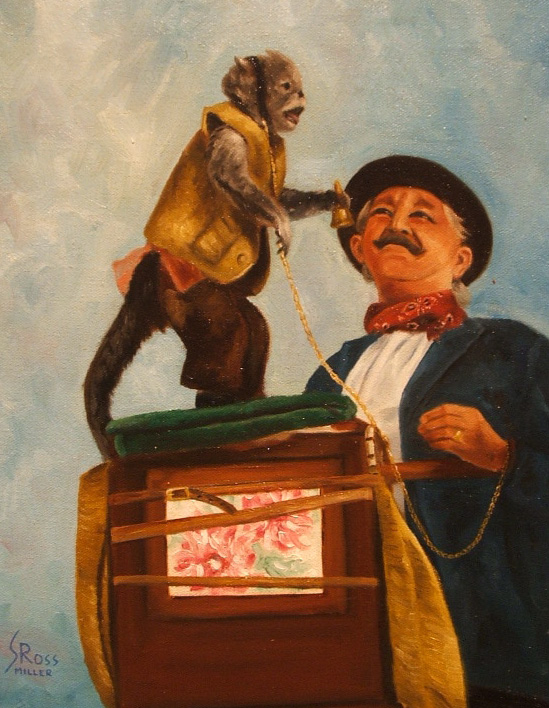
Punish the monkey

You may not have noticed, but this week our government became more accountable.  Is that a good thing?

The Merriam-Webster dictionary defines accountability thusly:
...the quality or state of being accountable, liable or answerable; especially : an obligation or willingness to accept responsibility or to account for one's actions <public officials lacking accountability>...
Not bad objectives for public institutions, but if you are a human being, specifically an employee, these are not terribly positive, empowering or motivating definitions.  All of the responsibility devolves to them.

Perhaps that's why the "A" word has employees rolling their eyes, running for cover, or heading for the exit:  many view accountability as just another modern, Newspeak business term for blaming, finger-pointing and butt-covering.  Punishment, in other words.

Saturday, April 21, 2012

Is it safe?

Growth is always a hot topic at the monthly TAB meetings I facilitate:  strategies, plans, tactics, obstacles, wins, losses, etc.

Most of our businesses are doing well, but some have seen their top lines flatten and a very few have experienced sales declines.

Bottom line-wise, our business owners have seen their operating costs escalate.  The cost of goods, taxes, health care, energy, professional services have all been rising. Most have been very good at maintaining their margins by controlling their variable expenses.

But nipping and tucking only gets you so far, as we are finding out in the debate over growth versus austerity at the national and international level.  You can't cut your way to growth over the long term.

Saturday, April 14, 2012

Beneath the waterline

-->
As you may have heard if you weren't stranded on an ice floe, the supposedly unsinkable Titanic went down in the North Atlantic exactly 100 years ago this weekend.

It remains an epochal event; one of the greatest catastrophes of the 20th century.  At the time, it was “unthinkable,” "impossible."  A black swan. 

Until the details emerged.  With the benefit of hindsight, it all seemed inevitable:  corners cut, disbelief suspended, expert opinions ignored.  This is partly why Titanic has transcended the literal and become metaphor for commercial hubris, institutional blindness and human fallibility (and more, to some.) 

Monday, April 9, 2012

Empowering thoughts

-->
People start their own business for a number of reasons -- some to follow a passion, some always dreamed of being their own boss, while others were in search of flexibility that they didn’t find in larger organizations. Those who grow beyond solo entrepreneurship will quickly find out that getting the right people on the bus is even more important when you’re driving a small scale version. When on-boarding a new employee, consider this:
“If you hire people just because they can do a job, they’ll work for your money. But if you hire people who believe what you believe, they’ll work for you with blood and sweat and tears.” (Simon Sinek, author of Start with Why.)
Ensuring that you find people who believe what you believe requires that you have a clearly defined vision [see this earlier post]. You also need to choose those who are able to multi-task and not worry so much about staying in the confines of their role, and to “jump out of their seat” when needed. To see what a fully-engaged employee looks like, check out Jeff Haden's 8 Qualities of Remarkable Employees.

Saturday, March 31, 2012

Haircuts, Lipstick and Yogi

-->
One day recently I dashed into a local haircut shop shortly after it opened, hoping to beat the rush and get a quick trim before a meeting.  It had been a while and I was looking and feeling shaggy.

The store is one of those national franchise chains that have grown, weed-like, to seemingly inhabit every local shopping center.  It has been hawking its franchises on CNBC, LinkedIn, and other media.

There was no one in the store when I entered…no customers and no employees up front.  After a couple of minutes, a young woman (I'll call her Abby) came up from the back and apologized for my wait, saying, “it takes us a little longer to open up because we are short-staffed these days.” 

My family and I patronize this store frequently.  The staff is attentive, friendly and professional.  The cost of its services are reasonable, the cuts competent and the customer loyalty program keeps us, well, loyal.  The store has been popular and can get crowded at peak times, hence my early morning visit.

Saturday, March 24, 2012

Information duncity

Did you ever notice how some memes seemingly appear out of nowhere, then are suddenly ubiquitous -- like the car you never noticed until you bought one and now it seems everyone owns one?

I recently wrote about how failure can actually lead to success, and how "one's errors are a portals of discovery."  Turns out lots of people are talking and writing about mistakes lately.

One of the best pieces I've seen is one from TAB colleague John Dini, who recently wrote on the value of mistakes in business. His advice to start a "mistake budget" is one that I will steal gratefully, with generous attribution.

However, mistakes aren't always all they are cracked up to be.  In this unforgiving economy, we need to maximize "good" mistakes and minimize the "bad" ones.  We need to make better decisions.

And there's the rub.

Saturday, March 17, 2012

Heat Burns

It's been an interesting week in damage control.
How well are you prepared to defend yourself in the court of public opinion?  Every organization -- whether a globe-straddling colossus or a start-up just launching itself -- will face an emergency at some point.  After all, accidents happen, things break, smart people do stupid things and sometimes good people do bad things -- occasionally on purpose. As the saying goes, "stuff" happens.

Saturday, March 10, 2012

You say you want an evolution

Change:  there are few words in the human lexicon that evoke more angst than this, both good and bad.

Strange, that.

Change is a constant in our lives.  As constant as the dawn or the sunset.  Every day is different and change is an ever-present aspect of living.

Change is feared because often we are not in control of it, especially in business. Key employees leave, new competitors emerge, customers disappear.  (These changes are in your control, but that's the subject of another post.)
It is not the strongest of the species that survive, nor the most intelligent, but the one most responsive to change. Charles Darwin
Change forces us out of our habits.  And habits are a basic human mechanism for dealing with the  complexities of everyday life.
In a recent book, The Power of Habit, NY Times business writer Charles Duhigg explores the science behind why we do what we do (and how.)

Friday, March 2, 2012

Land of the free

-->
So, how did you spend your free day on Wednesday?  You, know, February 29, aka Leap Day.

Ladies, did you channel your inner Sadie Hawkins?

Dudes, did you take it head on, mano-a-mano.

Was it a day of routines, deadlines, accomplishments, chores, sports, striving.  Just another day; one of 365 366? 

Pity if you didn't leverage this quadrennial opportunity. 

It was FREE.  What do you mean that  you didn't take advantage of it?  What's wrong with you?  Don't you love free stuff?  Doesn't everybody?  Didn't you get the memo?

It seems that there's a offer of "free" everywhere you look:  Buy One/Get One Free; Free Estimates; Free Consultation; Free Delivery.  Consumers lap it up.  And why not, it's FREEEE!

No wonder the country is broke.  We're giving it all away.  Increasingly so.  Hard to make a buck that way, isn't it?